How to Prepare for a Panel Interview Without Getting Overwhelmed
Learn how to prepare for a panel interview, answer multiple interviewers clearly, manage turn-taking, and follow up with confidence.
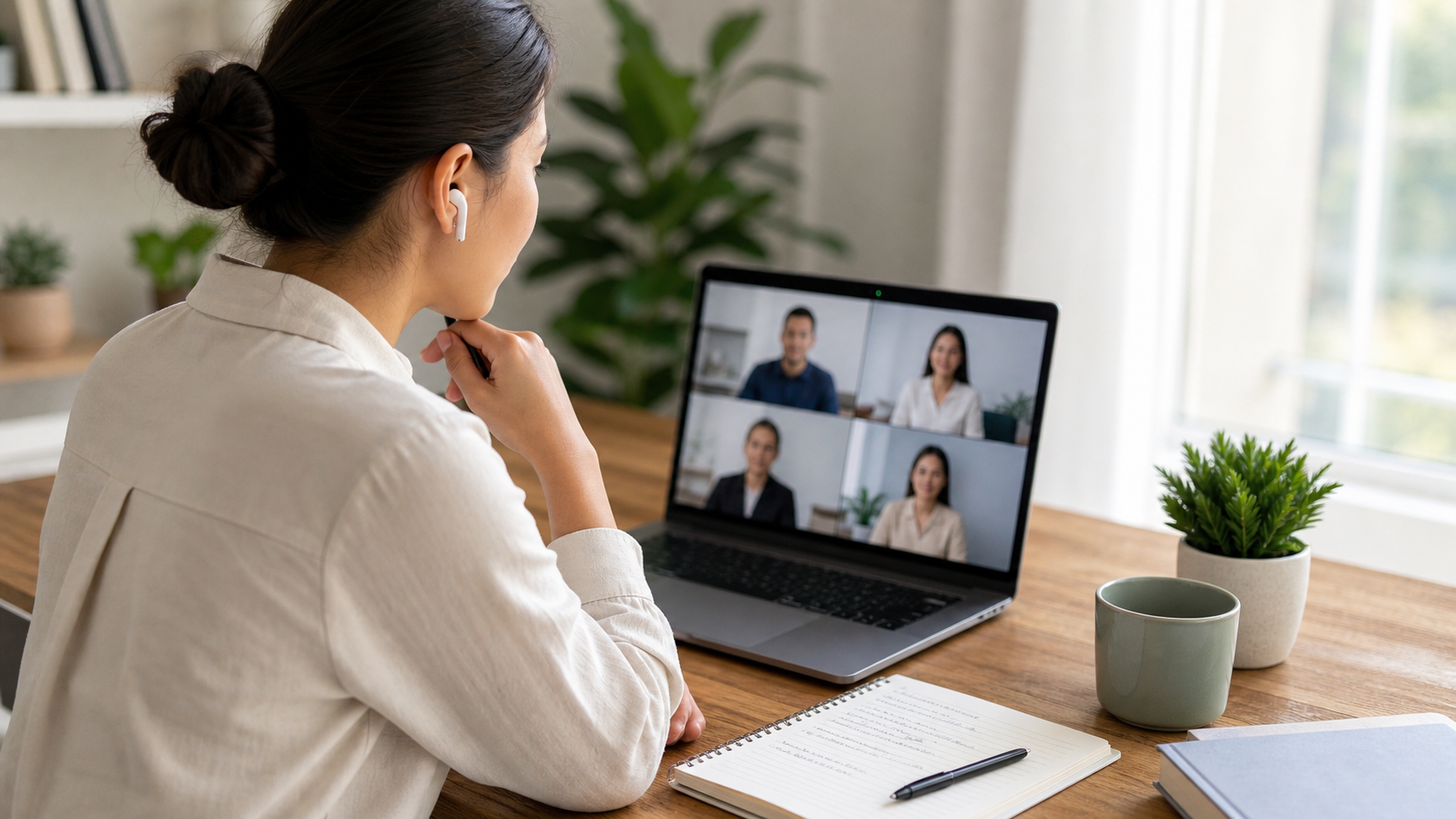
A panel interview can feel more intense than a one-on-one interview because you are not only answering questions. You are also tracking names, roles, reactions, follow-ups, and the rhythm of a group conversation.
That pressure is manageable when you prepare for the format instead of treating it like a normal interview with extra people.
The goal is simple: answer the person who asked the question, include the rest of the panel, and make your examples easy for different stakeholders to understand.
This guide shows you how to prepare for a panel interview without getting overwhelmed.
What makes a panel interview different
A panel interview includes two or more interviewers. The UCLA Career Center describes a panel interview as a format with multiple interviewers and recommends making eye contact with each panelist as you answer.
That means the challenge is partly content and partly coordination.
In a panel interview, different people may care about different things:
- a hiring manager may listen for ownership and judgment
- a teammate may listen for collaboration style
- a senior leader may listen for clarity and business impact
- a recruiter may listen for communication, enthusiasm, and fit
- a cross-functional partner may listen for how you handle tradeoffs
Your answers need to be specific enough to prove your experience, but clear enough for everyone in the room to follow.
Ask what to expect before the interview
If the recruiter has not already shared the format, ask a practical question before the interview.
For example:
“Could you share who I will be meeting with and whether this round will be behavioral, technical, case-based, or focused on team fit?”
Western Washington University’s interviewing guidance recommends asking process questions such as who you will interview with, whether the interview is online or in person, and what type of interview to expect.
That information helps you prepare without asking for unfair details.
Once you know the panel, write down:
- each person’s name
- their role or team
- what they may care about
- one question you could ask them
- one example from your background that may interest them
This keeps you from treating the panel like a single audience.
Build answers for several viewpoints
Before the interview, choose five examples that can work across different question types.
Prepare examples for:
- solving a problem
- working with a difficult stakeholder
- learning something quickly
- managing competing priorities
- handling feedback or conflict
For each example, know the business point in one sentence.
Example:
“This story shows how I communicate risk early instead of waiting until a deadline is already slipping.”
That one-sentence point helps a panel follow your answer. It also helps you adapt the same story if a different interviewer asks from a different angle.
If you need a stronger story bank before the panel, use how to prepare for behavioral interview questions without memorizing answers.
Open with a clear headline
In a panel interview, long setup makes answers harder to follow. Start with the answer, then add the example.
Instead of:
“There was this one time in my last role where we had a lot going on, and I was working with another team, and the deadline changed…”
Try:
“The main thing I do when priorities shift is clarify the decision owner first. For example, in my last role…”
That headline tells every panelist what to listen for.
Use this structure:
- One-sentence answer
- Short context
- Your action
- Result or lesson
- Link back to the role
That final link matters. A panel may include people who do not know your resume deeply. Help them understand why the example matters for this job.
Manage eye contact and turn-taking
For in-person panels, begin by looking at the person who asked the question. As you answer, include the rest of the panel naturally. End by returning to the person who asked.
For remote panels, the same principle applies, but it is more practical to balance camera attention with screen attention:
- look at the speaker when they ask the question
- glance toward the camera during the main point
- avoid staring at your own tile
- write names in the order they appear on screen
- pause briefly before answering so you do not talk over anyone
The goal is not perfect eye contact. The goal is to show that you are speaking to the group, not disappearing into your notes.
If remote interviews make you feel distracted, read how to use an AI interview assistant during a remote interview.
Practice answers for a real panel format
Use Voqra to organize examples, interviewer priorities, and concise answers before the panel starts.
Keep a panel name map
One of the easiest ways to feel more prepared is to create a quick name map.
For a remote interview, write the names in the same layout as the video grid:
Top left: Maya - hiring manager
Top right: Eric - operations
Bottom left: Priya - customer success
Bottom right: Jordan - recruiter
For an in-person interview, write the names in seating order if you can.
This helps you:
- address people by name when appropriate
- remember who asked which question
- connect follow-up answers to earlier comments
- write a more specific thank-you note after the interview
Do not overuse names in the conversation. Use them when it feels natural.
Prepare questions for different panelists
USC Online’s panel interview guidance recommends preparing questions for panel interviewers. That matters because a good question can show that you understand different perspectives on the role.
Prepare a few questions that work for different people:
- For the hiring manager: “What would success look like in the first 90 days?”
- For a teammate: “What makes someone easy to work with on this team?”
- For a cross-functional partner: “Where does this role need to build trust with other teams?”
- For a senior leader: “What problem would this role help the team solve this year?”
- For the recruiter: “What are the next steps after this panel?”
Ask questions that invite real conversation. Avoid asking every person the same generic question if the panel has clearly different roles.
Handle follow-up questions calmly
Panel interviews often include layered follow-ups. One person asks a question, another person asks you to clarify, and a third person may test a different angle.
Do not treat that as a bad sign. It often means they are trying to understand your thinking.
Useful phrases:
- “The short answer is yes, and the reason is…”
- “I would separate that into two parts.”
- “The tradeoff I would watch is…”
- “A real example of that is…”
- “Let me clarify what I owned versus what the team owned.”
If you do not know the answer, be direct. Use how to answer interview questions when you do not know the answer to practice staying composed without pretending.
Avoid common panel interview mistakes
Watch for these:
- answering only the highest-ranking person
- giving long answers because more people are listening
- forgetting names and roles
- ignoring quiet panelists
- repeating the same example for every question
- reading from notes in a remote interview
- interrupting because of video delay
- asking no questions at the end
The fix is not to become overly polished. The fix is to make the conversation easier for the group to follow.
Shorter answers usually help.
Follow up after the panel
After the interview, write down:
- who attended
- what each person seemed to care about
- one strong moment from the conversation
- one point you would clarify if there is another round
- the next-step timeline
Then send a concise follow-up. If you have each interviewer’s email and spoke with them directly, individual notes can work. If not, a clear group thank-you through the recruiter is fine.
Use how to write a follow-up email after an interview for templates.
Example:
Hi Maya,

Thank you to you and the team for today’s conversation. I appreciated hearing how the role connects customer feedback, onboarding, and internal process improvements.

The panel helped me better understand where this role can create impact, and it made me even more interested in the opportunity. My experience coordinating cross-functional handoffs feels closely aligned with the challenges we discussed.

Thanks again for your time. I look forward to next steps.

Best,
Jordan
Panel interview checklist
Before the interview, make sure you have:
- confirmed who will attend, if possible
- researched each interviewer’s role
- prepared five flexible examples
- written a name map
- practiced concise answer openings
- prepared questions for different panelists
- tested your camera, audio, and lighting for a remote panel
- planned a follow-up note
For a broader plan before the panel, use Voqra’s interview preparation page. If you want help organizing examples and practicing answers, start with the interview assistant workflow.
Final thought
A panel interview is not four separate interviews happening at once.
It is one conversation with several perspectives in the room.
Prepare for the people, not just the questions. Keep your answers structured. Include the full panel without losing the person who asked. When you make the conversation easier to follow, you make your strengths easier to remember.
Get ready for the panel conversation
Use Voqra to organize your panel notes, examples, and practice answers before the real interview.
References
Frequently asked questions
What is a panel interview?+
A panel interview is an interview with two or more interviewers. They may represent different teams, levels, or functions, and each person may evaluate a different part of your fit.
How do I prepare for a panel interview?+
Research the interviewers if you know their names, prepare examples for different priorities, practice concise answers, and prepare questions that work for multiple panelists.
Who should I look at during a panel interview?+
Start by answering the person who asked the question, then include the rest of the panel with natural eye contact or screen attention as you explain your answer.
Should I send a thank-you email after a panel interview?+
Yes. Send a concise follow-up that thanks the group or individual interviewers, references a specific part of the conversation, and restates your interest.
Voqra Team
Interview preparation team
The Voqra team builds AI interview tools for candidates who want practical support before and during real interviews.
Related articles
How to Write a Follow-Up Email After an Interview
Learn how to write a clear follow-up email after an interview, what to include, what to avoid, and how to sound interested without sounding pushy.
How to Prepare for a Skills-Based Interview in 2026
Learn how to prepare for skills-based interviews by mapping job requirements to proof, building stronger examples, and answering live questions clearly.
How to Use an Interview Copilot During a Live Interview
Learn how to use an interview copilot during a live interview without sounding scripted, distracted, or dependent on AI.