How to Calm Down Before an Interview and Think Clearly
Learn how to calm down before an interview with practical techniques that reduce anxiety, prevent mental blanking, and help you think clearly under pressure.
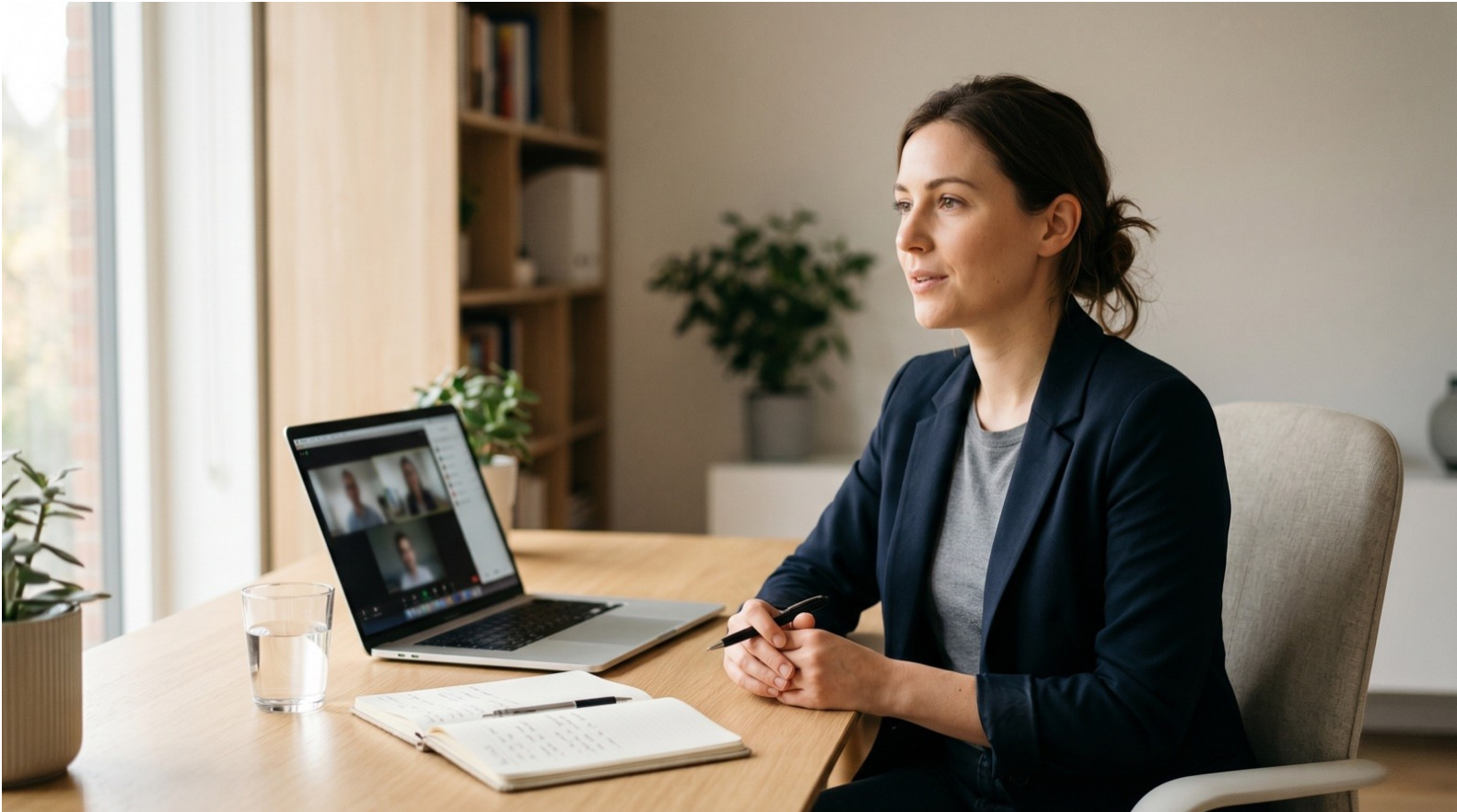
You prepared for the interview. You researched the company, reviewed your resume, practiced answers, and maybe even rehearsed in front of a mirror. But the moment the interview starts, your heart races, your mind goes blank, and suddenly even simple questions feel difficult to answer.
If this sounds familiar, you are not alone.
Many qualified candidates struggle with interview anxiety, especially during remote interviews where silence can feel more intense and pressure feels amplified through a screen. Even highly skilled professionals sometimes freeze during interviews, forget key points, or struggle to communicate clearly under stress. For more background on anxiety itself, Harvard Health explains common anxiety symptoms and patterns.
The good news is that interview anxiety is manageable. Learning how to calm down before an interview is not about becoming fearless. Instead, it is about reducing mental overload so you can think clearly, stay composed, and communicate confidently.
If you want a broader system for practicing and answering under pressure, this guide should sit alongside Voqra’s interview preparation and interview assistant pages, not replace them.
In this guide, you will learn:
- why interviews trigger anxiety
- how to calm down before an interview naturally
- what causes mental blanking
- practical breathing and communication techniques
- how to stay calm during remote interviews
- what to do if your mind goes blank mid-answer
Why Interviews Make People So Nervous
Interviews trigger a stress response because they combine uncertainty, evaluation, and pressure in real time.
This is why many candidates experience symptoms like:
- rapid heartbeat
- sweaty hands
- shaky voice
- mental blanking
- difficulty forming sentences
- overthinking simple questions
Remote interviews can make this even worse because candidates often focus too much on:
- their appearance
- eye contact
- awkward pauses
- delayed reactions
- silence on video calls
Research published in a PubMed-indexed meta-analysis on anxiety and working memory found an association between anxiety and poorer working memory performance under pressure, which may help explain why candidates sometimes struggle to recall information clearly during stressful interviews.
The important thing to remember is this:
Feeling nervous before an interview does not mean you are unqualified.
In many cases, anxiety simply means the opportunity matters to you.
How to Calm Interview Nerves in the Last 10 Minutes
If you searched for how to calm interview nerves because the meeting is about to start, do not try to learn a new system at the last minute.
Use a short reset instead:
- Put your phone away or turn on focus mode.
- Take a few slower breaths before opening the meeting link.
- Review only your strongest two or three examples.
- Say your first answer out loud once.
- Remind yourself that pauses are allowed.
The goal is to lower the amount of noise in your head.
Many candidates make the final 10 minutes harder by rereading everything, opening too many notes, or trying to memorize a perfect answer. That can increase pressure because your brain starts comparing the live interview to a script.
A better final reset is simple:
“I know my examples. I can pause. I can answer one question at a time.”
That mindset matters because interview anxiety often becomes worse when candidates think they must perform flawlessly. If the main issue is not pre-interview nerves but answering clearly once the question arrives, use how to answer interview questions when you feel nervous as the next guide.
Why Candidates Freeze During Interviews
One overlooked reason candidates blank out is cognitive overload.
During interviews, your brain is trying to simultaneously:
- remember answers
- maintain eye contact
- analyze the interviewer
- avoid awkward pauses
- sound intelligent
- manage anxiety
- think ahead to the next question
That is a massive amount of mental pressure.
This is especially common in software engineering, consulting, finance, and other high-pressure industries where candidates feel they must sound extremely polished at all times.
Many intelligent and highly self-aware candidates also tend to over-monitor themselves during interviews, which can increase mental fatigue and make communication feel less natural.
Interestingly, many professionals report performing better once they stop trying to sound perfect and instead focus on communicating clearly and honestly.
Try a live-style interview question
Use the Voqra demo to hear a realistic prompt and see how a candidate-ready answer is generated.
How to Calm Down Before an Interview
There is no single trick that instantly removes anxiety. Instead, the goal is to reduce pressure gradually using techniques that help your brain feel more in control.
Here are some of the most effective methods.
Stop Trying to Sound Perfect
One of the biggest causes of interview anxiety is perfectionism.
Many candidates believe they need to:
- answer every question perfectly
- avoid pauses completely
- sound highly polished at all times
However, this creates enormous mental pressure.
In reality, interviewers are usually evaluating:
- clarity
- communication
- problem-solving
- confidence
- authenticity
Not robotic perfection.
Instead of trying to deliver perfect answers, focus on having a calm conversation.
This mindset shift alone can dramatically reduce anxiety.
Prepare Stories Instead of Memorizing Scripts
Memorized answers often collapse under pressure.
When anxiety rises, your brain struggles to recall exact wording. That is why many candidates suddenly blank out during interviews even after practicing for hours.
A better approach is to prepare flexible stories instead.
For example, think about:
- a challenge you solved
- a mistake you learned from
- a project you improved
- a conflict you handled
- a time you worked under pressure
Once you understand your experiences clearly, you can adapt them naturally to different questions.
This reduces mental effort during interviews.
For deeper preparation strategies, see more Voqra interview preparation guides, the main interview preparation hub, and try a live demo question.
Practice Speaking Out Loud
Reading answers silently is not enough.
Interviews are verbal performance situations. Your brain needs practice converting thoughts into spoken communication under mild pressure.
Before your interview:
- answer questions out loud
- simulate real conversations
- record yourself speaking
- practice maintaining calm pacing
Many candidates are surprised by how different answers sound once spoken aloud.
Reduce Last-Minute Chaos
Interview anxiety often increases when candidates rush right before the meeting.
Simple problems like:
- poor internet connection
- audio issues
- messy surroundings
- forgotten documents
- low laptop battery
can increase stress dramatically.
Try to create a calmer environment before the interview begins.
A simple pre-interview checklist can help:
- test your microphone and camera
- close unnecessary browser tabs
- keep water nearby
- open your resume and notes
- join the meeting early
- silence phone notifications
Removing small stressors frees up mental energy.
Use Breathing Techniques to Reduce Physical Anxiety
When people search for how to calm down before an interview, they often underestimate the physical side of anxiety.
Controlled breathing techniques are commonly used to help calm the body’s stress response and reduce feelings of anxiety.
One popular method is box breathing:
- Inhale for 4 seconds
- Hold for 4 seconds
- Exhale for 4 seconds
- Hold for 4 seconds
- Repeat several times
The Cleveland Clinic notes that box breathing may help move the body out of “fight-or-flight” mode and into a calmer state.
Even a few minutes of slower breathing before an interview can help many candidates feel more grounded and mentally clear.
What to Do If Your Mind Goes Blank During an Interview
Mental blanking is extremely common.
The worst thing you can do is panic about panicking.
Instead:
Pause Briefly
Taking a short pause is completely normal.
You can say:
- “That’s a good question.”
- “Let me think about that for a second.”
- “I want to give a thoughtful answer.”
Most interviewers will not see this negatively.
In fact, thoughtful pauses often make candidates sound more composed.
Break the Question Into Smaller Parts
If a question feels overwhelming, simplify it mentally.
For example:
“Tell me about a time you handled conflict.”
Break it into:
- What happened?
- Who was involved?
- What did I do?
- What was the outcome?
This reduces cognitive overload and helps organize your thoughts more clearly.
Speak Slowly
Anxiety often causes people to rush.
Speaking slowly:
- improves clarity
- reduces mental chaos
- makes you sound more confident
- gives your brain time to think
Slowing down can completely change how composed you appear during interviews.
Why Remote Interviews Feel More Intense
Many people report feeling more anxious during remote interviews than in-person interviews.
Virtual interviews introduce additional pressure:
- staring at yourself on camera
- delayed reactions
- silence feeling longer
- difficulty reading body language
- fear of technical issues
To reduce pressure during remote interviews:
- hide self-view if possible
- keep notes nearby
- maintain a clean, quiet environment
- focus on conversation instead of performance
One pattern many candidates notice is that anxiety often becomes worse when they try too hard to “perform professionally” instead of communicating naturally.
The more mental energy spent monitoring yourself, the harder it becomes to think clearly.
Some candidates also use structured preparation tools to organize thoughts more calmly before and during interviews.
For example, platforms like Voqra are designed to help remote interview candidates structure responses more clearly in real time. If that is the main use case you care about, the product pages for AI interview copilot and interview assistant explain where real-time support fits and where broader prep still matters.
The goal is not to rely entirely on technology, but to create enough mental support that candidates can communicate more confidently under pressure.
Build a Pre-Interview Routine
One of the best long-term ways to reduce anxiety is consistency.
Professional athletes, speakers, and performers often follow routines before high-pressure situations because routines reduce uncertainty.
Your pre-interview routine could include:
- light exercise
- deep breathing
- reviewing key experiences
- positive self-talk
- drinking water
- listening to calming music
Over time, your brain begins associating the routine with preparation and stability.
Focus on Connection, Not Performance
Many candidates enter interviews thinking:
“I need to impress them.”
This mindset creates pressure.
Instead, try reframing interviews as conversations where both sides are evaluating fit.
You are not simply trying to “pass.”
You are discussing:
- whether the role fits your goals
- whether the environment suits you
- whether your skills align with the position
This shift often reduces fear significantly.
Suggested Next Reads
- Read How to Answer Interview Questions When You Feel Nervous if your nerves show up during answers
- Learn how Voqra positions an AI interview copilot for live support
- See the broader interview assistant workflow
- Start with the main interview preparation page
- Read How to Prepare for an Interview
- Browse more interview anxiety articles
- Read practical remote interview tips
- Explore broader interview preparation guides
- Try a live-style Voqra demo question
Final Thoughts
Learning how to calm down before an interview is not about eliminating nervousness completely. Even experienced professionals still feel pressure before important conversations.
The real goal is learning how to manage anxiety so it does not control your thinking, communication, or confidence.
Simple strategies like breathing exercises, practicing out loud, slowing down your speech, and preparing flexible stories can make a major difference in how you perform during interviews. Over time, these habits help reduce mental blanking and improve your ability to stay composed under pressure.
Most importantly, remember that struggling with interview anxiety does not mean you are incapable or unqualified. Many intelligent and talented people experience the exact same thing.
With preparation, self-awareness, and the right support systems, interviews can become far less intimidating and much more manageable.
Continue with the Voqra blog for more interview preparation guides, explore the broader interview preparation path, or try the Voqra demo before your next remote interview.
References
Frequently asked questions
Why do I blank out during interviews?+
Mental blanking can happen when stress and anxiety interfere with working memory and recall under pressure.
Is interview anxiety normal?+
Yes. Anxiety is a common response to stressful situations involving evaluation or uncertainty.
How do I calm my nerves before a Zoom interview?+
Many candidates find it helpful to practice answers out loud, reduce distractions, hide self-view, join meetings early, use breathing exercises, and slow their speech.
Can interviewers tell if I’m nervous?+
Usually yes, but minor nervousness is extremely common and typically not viewed negatively.
Can anxiety affect interview performance?+
Stress and anxiety may affect recall, concentration, and communication under pressure.
How do I stop overthinking during interviews?+
Focus on answering one question at a time, slowing down, speaking naturally, and treating the interview like a conversation instead of a performance.
How do I calm interview nerves right before the call starts?+
Use a short reset routine: slow your breathing, review two or three key examples, close distractions, and remind yourself that the goal is clear communication, not perfection.
Voqra Team
Interview preparation team
The Voqra team builds AI interview tools for candidates who want practical support before and during real interviews.
Related articles

Signs Your Interview Went Well and What to Do Next
Learn the signs your interview went well, what those signals actually mean, and how to follow up without overthinking the waiting period.

How to Prepare for Behavioral Interview Questions Without Memorizing Answers
Learn how to prepare for behavioral interview questions without memorizing answers by building flexible stories, practicing clearly, and adapting in real time.

How to Answer “Why Do You Want This Job?” in an Interview
Learn how to answer why do you want this job with a clear structure, stronger examples, and a confident response for live or remote interviews.